How the plan works
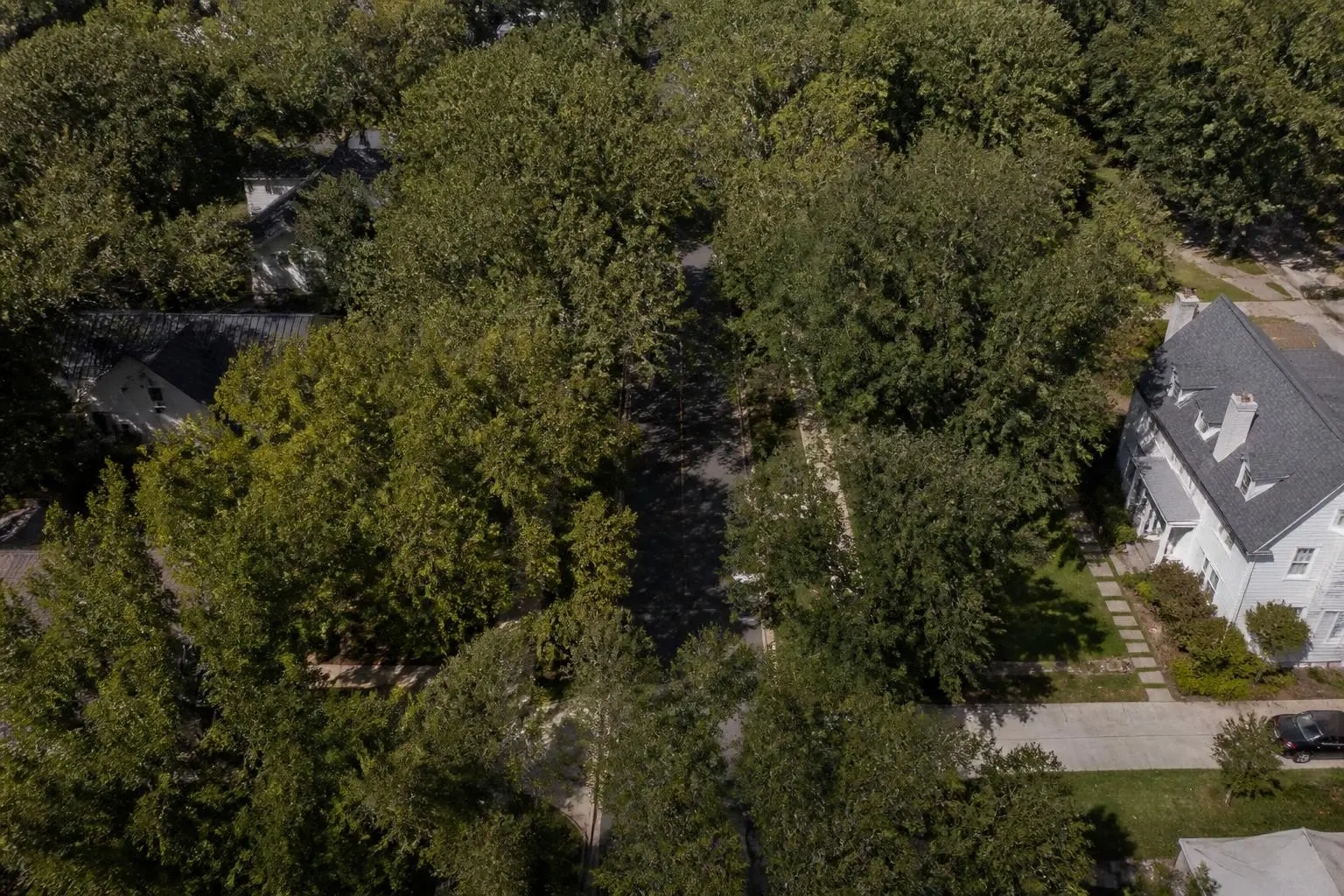
The 1927 plat followed ridgelines and existing tree stands rather than imposing a grid. The practical consequence is that Eastover's interior streets curve, connect to each other rather than to arterials, and offer no shortcut for anyone who does not live here. Traffic counts on interior blocks are extremely low for a neighborhood this close to the center city.
The two boundary arterials — Providence Road and Randolph Road — are a different environment. Houses fronting them are frequently as fine as anything inside, but they trade at a discount, and buyers should budget for glazing, landscape screening, and a hard look at the driveway approach.
Street by street
- Eastover Road
- The neighborhood's spine and its address of record. Broad, deeply canopied, with some of the largest original Georgian houses and the most consistent setback line in the neighborhood.
- Cherokee Road
- Runs past Eastover Elementary and carries the neighborhood's daily rhythm. A mix of grand and comfortable, with the school walk defining mornings on the west end.
- Ferncliff Road
- Curving, quiet, and heavily treed, with several of Eastover's deepest lots and a concentration of Tudor Revival and stone houses.
- Colville Road
- Tighter lots, exceptional street trees, and a run of well-kept Colonial Revival houses. Often where buyers find the most rational price per square foot inside the neighborhood.
- Hopedale Avenue
- Intimate scale and a strong sense of enclosure. Popular with buyers who want Eastover without an estate-sized maintenance load.
- Cranbrook Lane
- Short, private, and rarely on the market. When something trades here it usually does so before it lists.
- Providence Road frontage
- Handsome houses on a busy arterial. Excellent value in absolute terms; plan for sound mitigation and a turnaround in the drive.
- Randolph Road frontage
- The museum end of the neighborhood. Proximity to Mint Museum Randolph and Cotswold is a genuine amenity; the road itself is the trade-off.
How to weigh a block
The factors that actually move value between two otherwise comparable Eastover houses.
| Factor | What to look for | Why it matters |
|---|---|---|
| Canopy | Mature willow oaks on both sides of the street | Shade, summer cooling load, and the single strongest driver of how a block feels |
| Lot depth | Rear yard deep enough for a garden room and pool | Determines whether an addition or pool is even possible under setbacks |
| Traffic | Interior curve vs. arterial frontage | Interior blocks command a clear premium over Providence and Randolph frontage |
| Grade | How the house sits above the street | Elevated lots read grander and drain better; low lots need a drainage review |
| Neighbor quality | Recent rebuilds and their massing | One oversized new house changes the light and scale of the lots beside it |
| Utilities | Overhead vs. buried service | Buried service on a block is visually significant and rarely changes later |
Editorial assessment. Lot dimensions, setbacks, and easements should be verified on Mecklenburg County POLARIS before any offer.