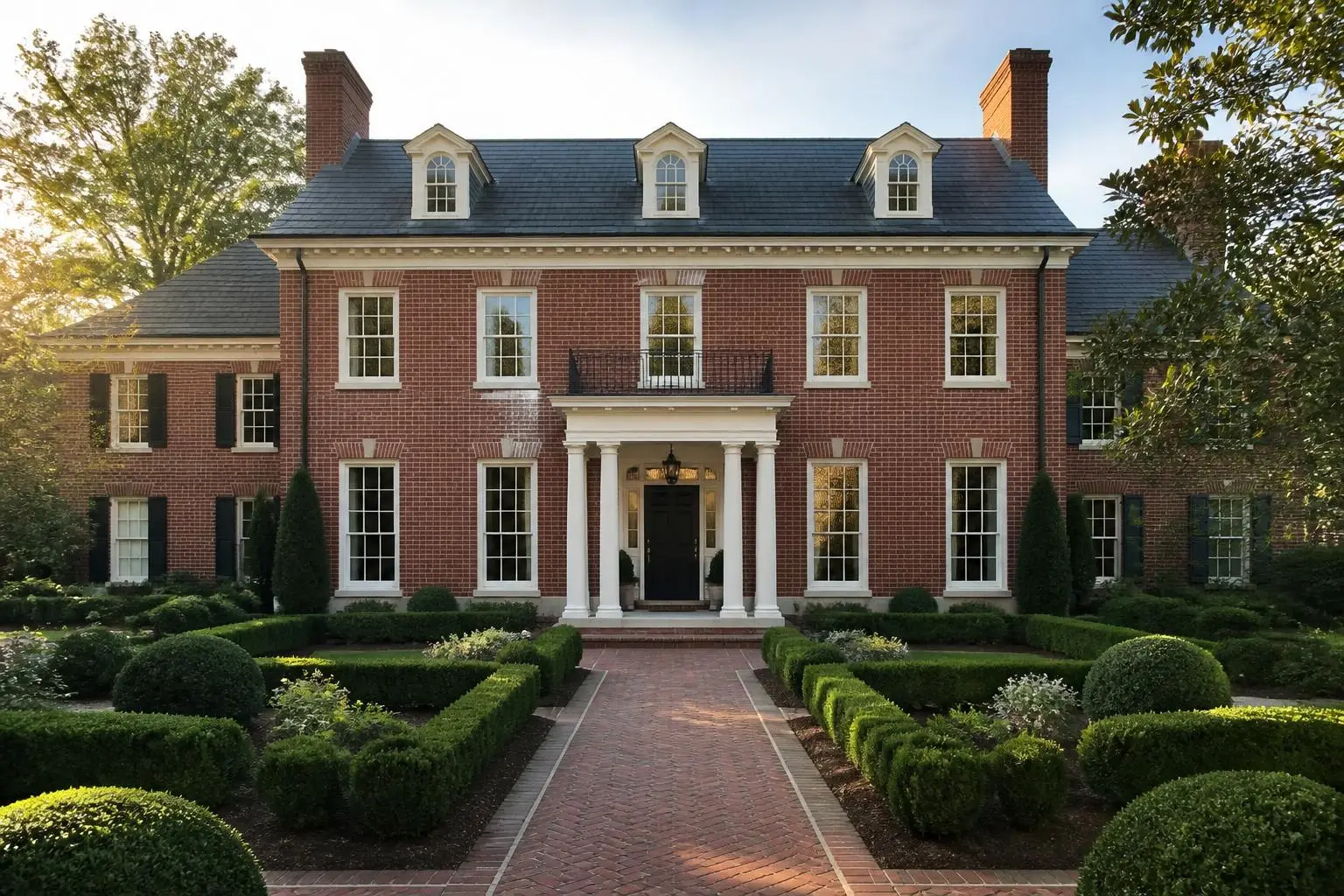
The price bands
Editorial bands based on how Eastover property is actually assembled. Confirm current pricing with Canopy MLS statistics and a licensed agent.
| Band | What it buys | Typical profile |
|---|---|---|
| $1.3M – $1.8M | Entry to the neighborhood | Smaller original house, modest lot, or a frontage parcel on Providence or Randolph. Often needs systems work. |
| $1.8M – $2.8M | Comfortable and updated | Three-to-four-bedroom original house, kitchen and baths renovated, interior block, good canopy. |
| $2.8M – $4.5M | Estate scale | Larger Georgian or Tudor, deep lot, garden and terrace, detached garage, substantial renovation already completed. |
| $4.5M – $9M | Best-in-class | Fully restored landmark house or high-quality recent rebuild on a premium block, with pool, guest quarters, and full technology. |
| $9M+ | Rare | The largest parcels and the most ambitious new construction. A handful of properties, rarely available. |
Ranges are editorial estimates for orientation, not appraisals, and change with the market. Not an offer to sell or a solicitation to buy.
Land carries the value
Because rebuilding is permitted and frequently done, the buyer pool for any Eastover parcel includes people who intend to replace the house. That puts a floor under land value and compresses the spread between a tired house and a renovated one on comparable lots.
The practical implication for sellers: a dated interior costs less than owners fear, provided the lot, canopy, and block are strong. For buyers: paying a renovation premium only makes sense if the work was done to a standard you would not want to redo.
What moves price within the neighborhood
- Block and canopy
- Interior curves with intact willow-oak canopy command a clear premium over arterial frontage.
- Lot depth and buildable envelope
- Whether the parcel can absorb a pool, a garden room, or a rear addition under current setbacks and tree-save rules.
- Roof and envelope condition
- Slate and copper in good order is worth real money; a failing roof on a masonry house is a six-figure conversation.
- Systems and structure
- Knob-and-tube remnants, original plumbing stacks, and undersized electrical services are the most common surprises.
- Quality of prior renovation
- Work that respected the envelope adds value; work that has to be undone subtracts more than it cost.
- Garage and parking
- A usable detached garage with a proper turnaround is scarce and disproportionately valuable.

The pre-market channel
A meaningful share of Eastover transactions happen before a sign goes in the yard. Estates, relocations, and owners who would rather not host public showings frequently transact through agents who know which neighbors are ready. If you are only watching public inventory, you are watching a fraction of the market.
Access to that channel is relationship-driven and local. It is the single strongest argument for working with a brokerage that transacts in this specific corridor rather than one that covers the metro generally.
If you are selling
Preparation in Eastover is not staging in the conventional sense. It is roof and gutter work, tree pruning, drainage correction, refinished floors, and a clean, well-lit envelope. Buyers at this level discount aggressively for deferred maintenance and reward evidence of stewardship.
Pricing should be set against genuinely comparable blocks, not neighborhood averages. With so few annual transactions, a single unusual sale can distort an automated valuation badly in either direction.