Start with licensing and insurance, not the portfolio
Every glossy portfolio looks similar. What differs — and what actually protects you — is verifiable licensing, insurance, and financial standing. In North Carolina, general contractors on residential projects above the state licensing threshold must hold a license issued by the NC Licensing Board for General Contractors, and the board's public search lets you confirm a company's license number, classification, and any disciplinary history before you ever meet in person.
Beyond licensing, ask directly for proof of current general liability insurance and workers' compensation coverage, and confirm the certificate names the coverage amounts rather than taking a verbal assurance. A builder should produce this without hesitation; reluctance is itself useful information.
Contract structure and cost transparency
Most disputes on high-end custom builds trace back to ambiguity written into the contract, not bad luck on-site.
- Cost-plus vs. fixed price
- Cost-plus contracts (often with a guaranteed maximum price) tend to give owners better visibility into actual costs on complex, highly customized builds; fixed-price contracts shift overrun risk to the builder but can incentivize corner-cutting on unspecified items. Have an attorney review the structure before signing either.
- Allowances
- Allowances for fixtures, stone, tile, and millwork are where budgets quietly slip. Ask for allowance line items to be specific dollar figures tied to a defined scope, not vague placeholders, and ask how overages are billed.
- Change-order process
- Get the change-order approval process in writing — who can authorize one, how pricing is calculated, and how it affects the schedule — before the first shovel goes in the ground.
- Payment schedule
- A payment schedule tied to verified project milestones, not simply the calendar, is standard practice and protects both sides.
- Warranty and punch-list culture
- Ask how the builder handles the final punch list and what its workmanship warranty actually covers. A builder's post-closing responsiveness is one of the most reliable signals of overall quality.
Building under a mature tree canopy
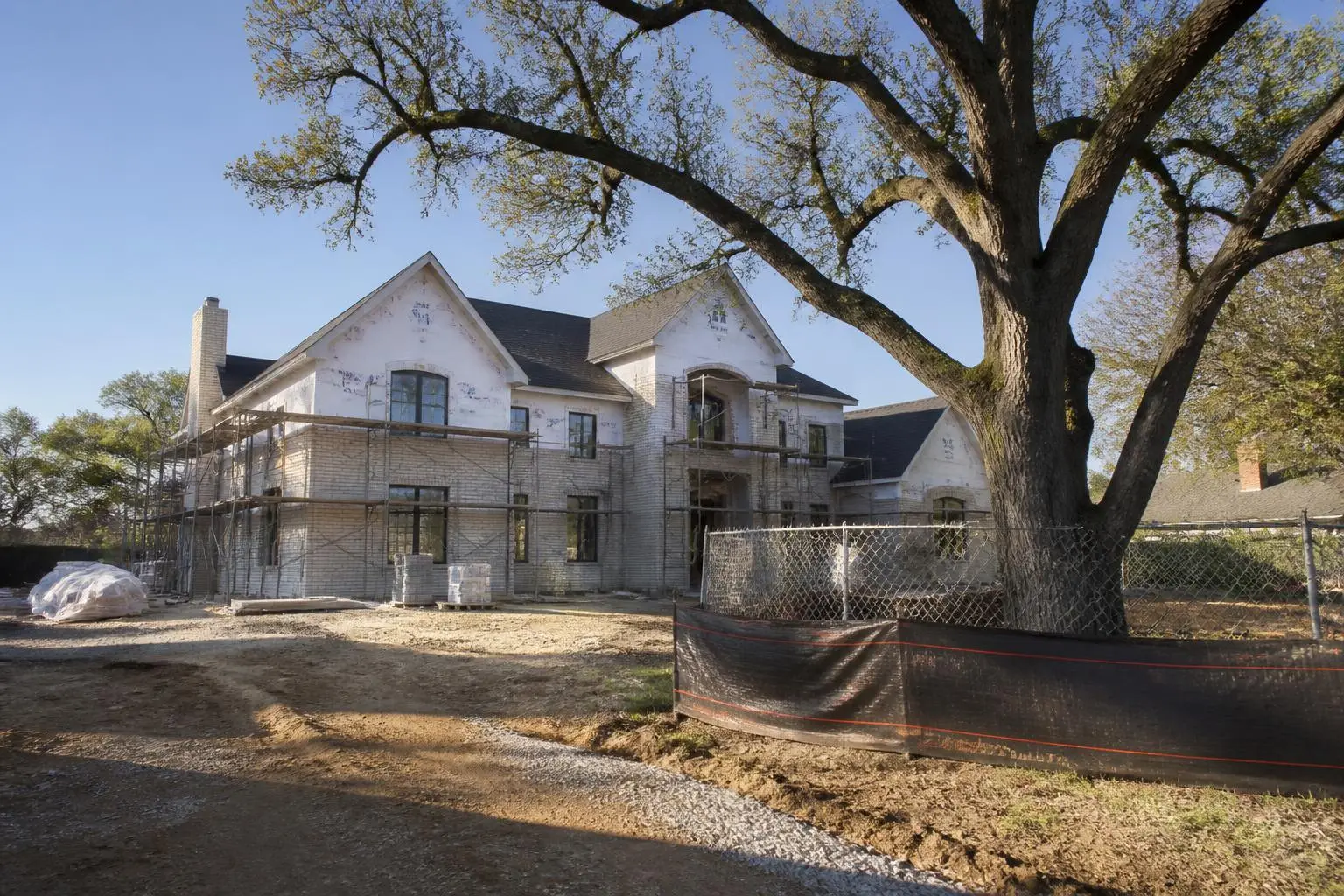
Eastover's identity is inseparable from its willow oak canopy, and that canopy creates real construction constraints. Charlotte's Unified Development Ordinance includes tree ordinance provisions that can require permitting, protection fencing, or replacement obligations tied to removing larger trees, and a builder unfamiliar with these rules can create costly delays or fines. Ask any prospective builder how many Eastover or similarly canopied-neighborhood projects they have actually completed, not just bid on.
Narrow, deed-era streets with little staging room are another practical constraint: material deliveries, dumpster placement, and worker parking all need a plan that keeps neighbors' access clear. Setback requirements under the Unified Development Ordinance and any applicable deed restrictions should be confirmed for the specific parcel before design work goes far, and a builder experienced in the neighborhood will usually have a working relationship with the relevant permitting staff already.
Neighbor relations matter more here than in a new subdivision. A pre-construction notice to adjacent owners, a realistic daily work-hours commitment, and a named on-site point of contact go a long way toward keeping a months-long project on good terms with the street.
Questions worth asking before you sign
A capable builder should answer all of these specifically, not generically.
| Question | What a good answer sounds like |
|---|---|
| Can I verify your license number directly? | Provides the number unprompted; it matches the NC Licensing Board record. |
| How many projects have you built in canopied, deed-restricted neighborhoods? | Names specific streets or neighborhoods, not just "we've done historic work." |
| What's your change-order rate on recent projects? | Gives an actual range and explains what drove overages. |
| Who is my day-to-day point of contact on site? | A named superintendent, not "whoever is available." |
| How do you handle tree protection and the UDO tree ordinance? | Describes a specific process, not a general assurance. |
A local example: Peters Custom Homes
Peters Custom Homes builds ground-up custom houses, additions, and whole-house renovations concentrated in Eastover and Charlotte's broader historic estate corridor — the kind of work that requires fluency in setback rules, tree protection, and narrow-street staging rather than a subdivision playbook. The firm is one of a small affiliated group that also includes a Charlotte residential real estate practice, an interior design studio, and a smart-home integrator, which can simplify sequencing for owners coordinating design, construction, and technology on one project.
As with any builder, confirm current licensing, request references from recently completed Eastover-area projects, and have your attorney review the proposed contract structure before committing.