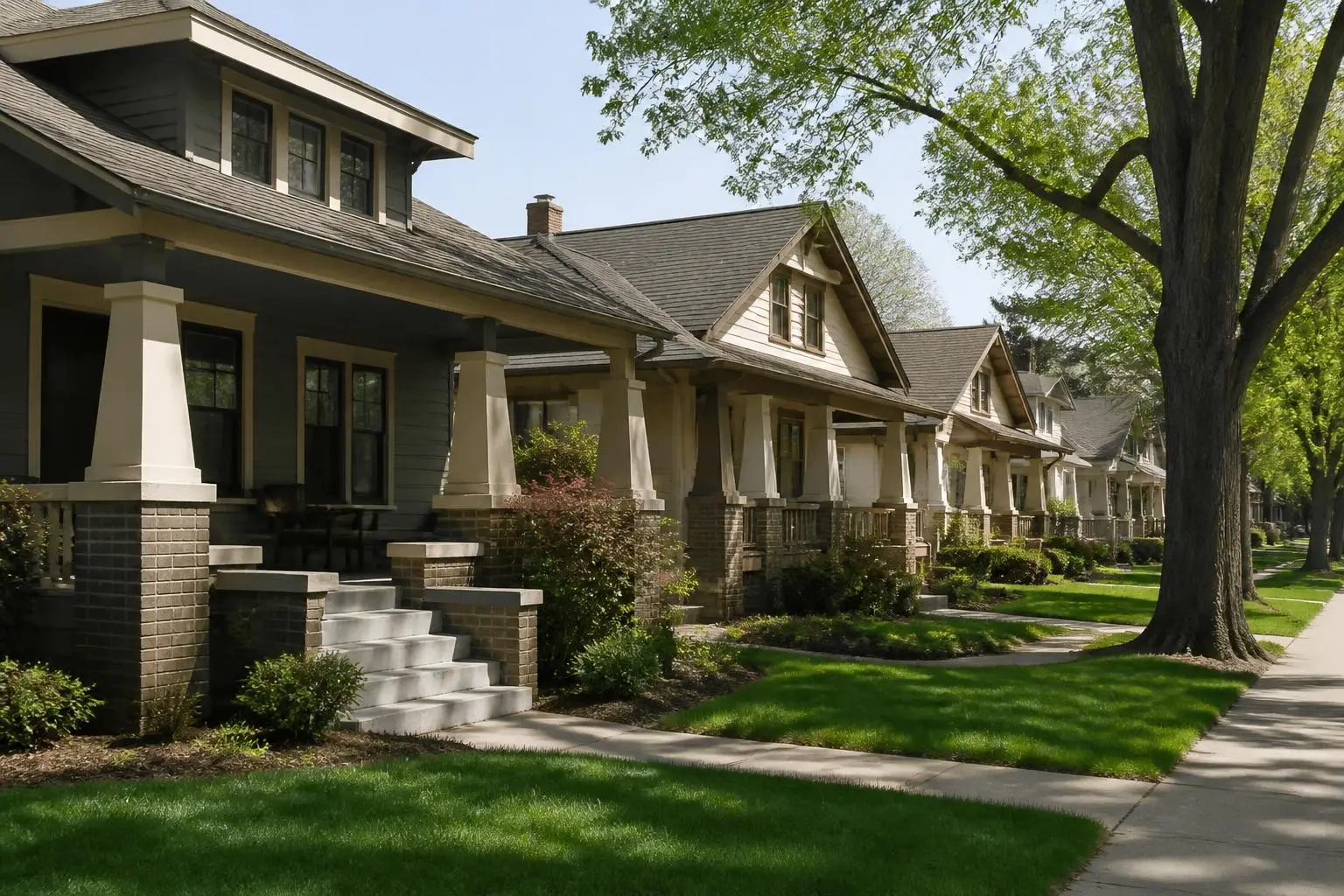
About Dilworth
Founded in 1891 by Edward Dilworth Latta and served by Charlotte's first electric streetcar line, Dilworth predates Myers Park by two decades and Eastover by nearly forty years. Its southern half was later reworked to a Nolen plan, giving it curving streets and a park spine.
Today Dilworth pairs Victorian and Craftsman housing with a dense commercial corridor along East Boulevard, plus immediate access to Freedom Park and the Little Sugar Creek Greenway. Portions are a City of Charlotte local historic district with binding exterior review.
What you will find
The housing and land patterns that define the area.
- Queen Anne and Victorian
- The oldest housing near the Uptown edge, with turrets, wraparound porches, and decorative trim.
- Craftsman bungalows
- The dominant type across most streets, from modest to substantially expanded.
- Tudor and Colonial Revival
- Concentrated in the later, Nolen-planned southern half near Freedom Park.
- Modern infill
- Townhomes and contemporary houses, tightly reviewed within the local historic district boundaries.
Compared with Eastover
An editorial comparison for orientation only — verify every figure yourself.
| Dilworth | Eastover | |
|---|---|---|
| Founded | 1891 | 1927 |
| Historic protection | Local historic district in part — binding review | No local historic district designation |
| Commercial spine | East Boulevard | None internal |
| Parks | Freedom Park, Latta Park | Little Sugar Creek Greenway nearby |
| Buyer profile | Younger, urban, walkability first | Established, privacy and scale first |
Comparisons are editorial. Confirm pricing with Canopy MLS, assignment with Charlotte-Mecklenburg Schools, and parcel facts with Mecklenburg County POLARIS.